
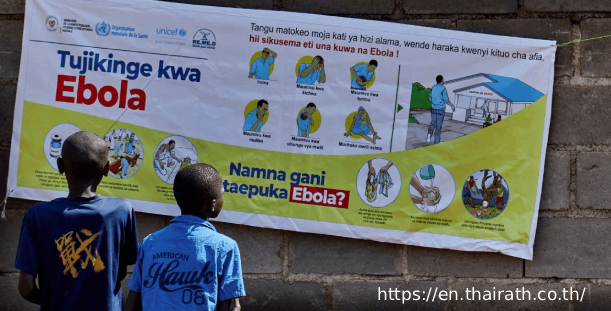
The World Health Organization (WHO) has warned that a vaccine targeting the current Ebola outbreak could take up to nine months to become available, as infections and deaths continue to rise in parts of Central Africa.
Officials say the delay is due to the fact that the virus strain involved, Bundibugyo Ebola, has very limited existing research and no approved vaccine. Two experimental “candidate vaccines” are currently in development, but neither has yet undergone full clinical trials.
WHO advisor Dr Vasee Moorthy explained that one of the most promising options could take six to nine months before it is ready for use, while another vaccine based on a platform similar to the AstraZeneca COVID-19 vaccine might be available sooner for trials but still lacks supporting animal data.
WHO Director-General Dr Tedros Adhanom Ghebreyesus said the outbreak is already significant, with around 600 suspected cases and 139 suspected deaths reported so far. Of these, 51 cases have been confirmed in the Democratic Republic of Congo (DRC) and two in neighboring Uganda. Health authorities expect numbers to rise as detection efforts continue.
The outbreak has been declared a Public Health Emergency of International Concern, although WHO stressed it is not currently at pandemic level. Dr Tedros noted that while the global risk remains low, the national and regional risk is considered high.
The epicenter of the outbreak is in eastern DRC, particularly Ituri province and parts of North Kivu. The first known case was a nurse who developed symptoms in April and later died. The virus has also been linked to mining communities, where movement and close contact have likely contributed to its spread.
Healthcare systems in affected areas are under severe pressure. Aid groups, including Médecins Sans Frontières (MSF), report that treatment centers are overcrowded and struggling to accommodate suspected cases. In some facilities, staff are working without sufficient protective equipment despite the arrival of some supplies.
The UK government has pledged up to £20 million in aid to support containment efforts, including funding for frontline healthcare workers, infection control, and improved disease surveillance.
Ebola spreads through direct contact with bodily fluids and can cause severe bleeding, organ failure, and death. While Bundibugyo Ebola is considered less deadly than some other strains, its rarity makes response efforts more difficult due to the lack of established tools and vaccines.
Eastern DRC continues to face additional challenges, including ongoing conflict and limited healthcare infrastructure, both of which complicate outbreak control efforts. Experts warn that early symptoms of Ebola often resemble common illnesses such as malaria and typhoid, making early detection difficult and allowing the virus to spread unnoticed.
As investigations continue, WHO officials say the priority remains containing transmission and strengthening surveillance before the outbreak expands further.