
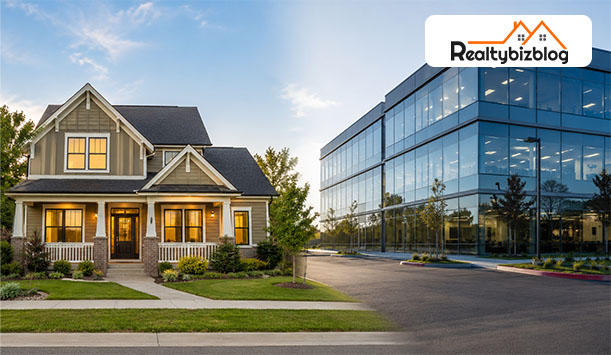
A friend of mine called me a few months ago with what sounded like a simple question.
“I’ve saved enough to buy an investment property,” he said. “Should I buy a rental house or wait until I can afford a commercial building?”
I thought I’d have an easy answer.
Instead, we ended up talking for almost an hour.
That’s because this question doesn’t have a clear winner. If it did, every investor would be buying the same type of property.
Some people quietly build wealth by renting out ordinary homes. Others make excellent returns from warehouses, office buildings, or retail spaces. Both approaches work. Both also come with headaches that nobody likes to talk about.
The trick isn’t choosing the property that promises the biggest returns on paper. It’s choosing the one you’ll actually be comfortable owning.
The appeal of residential property
Imagine buying a small two-bedroom house in a growing neighborhood.
You find tenants within a few weeks. They stay for three years. During that time, the home’s value slowly climbs while the mortgage balance keeps shrinking.
Nothing dramatic happens.
No viral success story.
No overnight fortune.
But year after year, you’re building equity without paying much attention.
That’s why so many people start with residential real estate. It feels familiar because we’ve all lived in homes. We understand what makes a neighborhood attractive, why schools matter, and why people are willing to pay more for certain locations.
Residential investing isn’t glamorous.
Some weekends disappear because a water heater suddenly decides it’s had enough. Sometimes you’ll be repainting walls after a tenant moves out when you’d rather be doing almost anything else.
Still, the demand for housing rarely disappears. People always need somewhere to live, and that’s one reason many investors sleep a little better owning residential properties.
Commercial real estate tells a different story
Now picture owning a small office building instead.
Instead of one family paying rent every month, you have businesses leasing your space.
The numbers suddenly look much bigger.
The monthly rent is higher.
The lease lasts several years instead of one.
Some maintenance expenses are even covered by the tenant, depending on the agreement.
At first glance, commercial property seems like the obvious winner.
But then one tenant leaves.
Finding another family to rent a house might take a few weeks.
Finding another company willing to rent an office, warehouse, or retail space can sometimes take months.
Meanwhile, the mortgage doesn’t stop.
Property taxes don’t disappear.
Insurance is still due.
This is the part people often forget when they compare rental income.
Bigger isn’t always better
One mistake new investors make is assuming that higher rent automatically means higher profits.
Real estate rarely works that neatly.
A modest rental home that’s occupied almost every month of the year can quietly outperform a commercial building sitting half empty.
On the other hand, a well-located warehouse leased to a successful business for ten years can generate returns that most residential properties could never match.
The numbers only tell part of the story.
Consistency matters too.
It also depends on who you are
Not everyone enjoys the same type of investment.
Some people like predictable income, even if the returns grow slowly.
Others don’t mind taking bigger risks if there’s a chance of earning more.
Neither approach is wrong.
Someone buying their very first investment property usually has different priorities than someone who already owns ten properties.
Experience changes the way you look at risk.
So does your budget.
There’s another cost people don’t calculate
Money isn’t the only investment.
Your time matters too.
Residential landlords often deal with maintenance calls, tenant questions, repairs, inspections, and lease renewals.
Commercial landlords have different responsibilities.
Instead of fixing leaking taps every other month, they may spend weeks negotiating lease terms or working with business owners who have very specific requirements.
Neither option is completely hands-off.
They simply ask different things from the owner.
So…which one actually offers better returns?
If you’re hoping for one final answer, I’m afraid I’ll disappoint you.
After that conversation with my friend, I asked him something instead.
“What kind of investor do you want to become?”
That changed the discussion completely.
He realized he wasn’t looking for the highest possible return.
He wanted steady income, manageable risk, and something he could learn from.
Residential property made more sense for him.
Someone else, with more capital and experience, might have reached the exact opposite conclusion.
And that’s perfectly okay.
Real estate isn’t a competition between houses and office buildings.
It’s about buying the right property at the right price in the right location and having the patience to let time do most of the work.
Sometimes the best investment isn’t the one that promises the biggest return.
It’s the one that lets you sleep well at night while your investment quietly grows in the background.
Share Your Real Estate Expertise
Have valuable insights or real estate expertise to share? RealtyBizBlog welcomes guest contributors who are passionate about real estate, homeownership, property investment, and home improvement. Submit a guest post to share your knowledge, reach a wider audience, and help readers make smarter property decisions.