
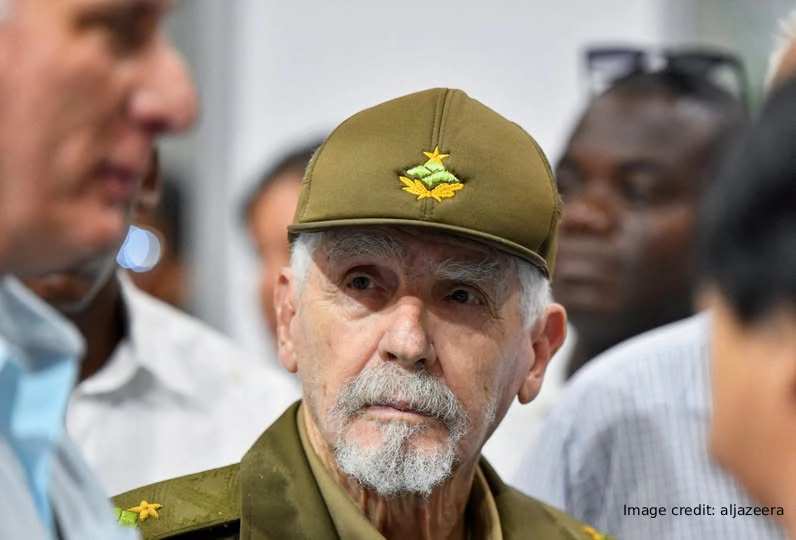
Ramiro Valdés Menéndez, one of the last remaining titans of the historic generation that forged the 1959 Cuban Revolution, died on Sunday, June 21, 2026, at the age of 94. His passing was confirmed in a joint statement by the Cuban government and the ruling Communist Party.
Cuban President Miguel Díaz-Canel expressed profound grief over the loss, stating on social media platform X that Valdés’ death “hurts deeply, like that of a father.” Díaz-Canel praised the veteran leader’s unwavering legacy, noting that every moment of his life was marked by absolute loyalty to the revolution’s original commanders, Fidel and Raúl Castro.
Born on April 28, 1932, in Artemisa, Valdés committed to the anti-imperialist struggle at a young age. At just 21, he fought alongside Fidel Castro in the pivotal 1953 assault on the Moncada Barracks, the event widely recognized as the opening salvo against US-backed dictator Fulgencio Batista. Following a period of exile in Mexico, Valdés was one of the 82 rebels who boarded the yacht Granma in 1956 to reignite the insurrection. He was notably one of only 12 men to survive the initial, brutal landing.
Throughout the guerrilla war in the Sierra Maestra mountains, Valdés served as the primary deputy commander to Ernesto “Che” Guevara, fighting by his side during the decisive Battle of Santa Clara. Following the rebel victory, he was awarded the permanent honorary title “Commander of the Revolution” and designated a “Hero of the Republic.”
In the decades that followed, Valdés became an architect of the Cuban state apparatus, founding the country’s prominent state security and intelligence agency (G2). He exerted sweeping political influence, serving twice as Minister of the Interior, and later holding vital posts as Minister of Telecommunications, Vice President, and Deputy Prime Minister.
Instantly recognizable by his signature olive-green military fatigues and sharp white goatee, Valdés remained a fierce loyalist through Cuba’s most severe economic crises. Up until his final years, he was actively involved in managing the island’s chronic energy shortages, frequently urging citizens to maintain their revolutionary discipline and unity. No official cause of death was provided.