
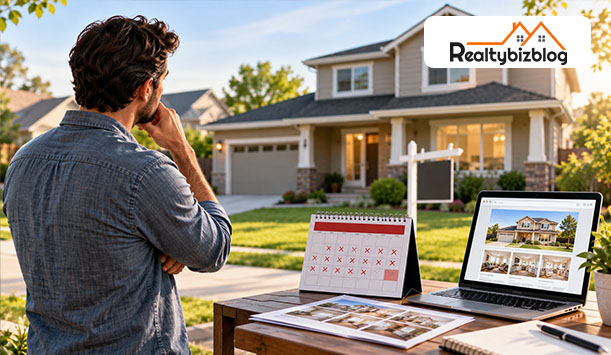
Sixty days ago, you listed your house feeling pretty confident.
The photos looked good. The asking price seemed reasonable. You cleaned every room, cleared out the clutter, and imagined a buyer walking through the front door within a few weeks.
But now the “For Sale” sign is still outside.
There have been a few showings. Maybe someone even said they loved the kitchen. Another buyer liked the backyard. But nobody has made an offer.
At this point, the natural thought is, “Where are all the buyers?”
Sometimes, though, the better question is: What should I reconsider?
A home sitting on the market for 60 days doesn’t automatically mean something is seriously wrong with it. But it does give you enough information to pause and look at the sale from a different angle.
Start With the Price
This is usually the first thing sellers need to revisit.
You may have chosen the asking price based on what you paid for the house, how much you invested in renovations, or what you need to walk away with after the sale.
Buyers don’t see those numbers.
They are looking at your property alongside other homes currently available in the same area. If similar houses are selling for less, even a well-maintained home can struggle to attract serious offers.
Look at what has actually sold recently, not just what other sellers are asking.
There is an important difference between “homes listed at this price” and “homes buyers actually paid this price for.”
If your home is consistently getting showings but no offers, pricing could be one of the things worth discussing with your real estate professional.
Pay Attention to What Buyers Are Saying
After 60 days, you probably have some feedback.
Maybe buyers keep mentioning the dated bathroom.
Maybe several people think the bedrooms feel small.
Maybe the house looks darker in person than it does in the photographs.
One comment might not mean much. But when different buyers point out the same thing, it’s worth paying attention.
Instead of thinking, “They just don’t understand the house,” try looking at the property through their eyes.
You don’t necessarily need to fix every complaint. Some changes may cost more than they’re worth. But repeated feedback can reveal why buyers are interested enough to visit but not interested enough to make an offer.
Take Another Look at the Listing Photos
Imagine you’re scrolling through dozens of properties on your phone.
You have two seconds to decide whether you want to click.
That’s the reality of online home shopping.
If your listing photos are dark, poorly framed, outdated, or filled with personal belongings, they may not be showing the property at its best.
And there’s another problem: your house may look different now than it did when the photos were taken.
If you’ve rearranged furniture, made improvements, changed the landscaping, or simply had seasonal changes, consider whether the listing still represents the home accurately.
Sometimes a fresh set of professional photos can change how people perceive the property before they ever schedule a showing.
Look Beyond the House Itself
Sellers naturally focus on their own property.
But buyers are comparing.
They might be looking at your three-bedroom house and another three-bedroom house down the road. One may have a slightly newer kitchen. Another may have a better outdoor space. A third might be priced similarly but require fewer immediate repairs.
Your home doesn’t have to be perfect.
But you should know what buyers are getting for their money elsewhere.
Spend some time looking at competing listings as if you were the buyer. Compare price, condition, location, features, photographs, updates, and even how the property is presented online.
You may notice something you hadn’t considered before.
Don’t Automatically Start a Huge Renovation
A slow sale can create panic.
Suddenly, that old bathroom looks like an emergency. The kitchen needs new cabinets. The floors should probably be replaced. Maybe the whole house needs painting.
Before spending thousands on renovations, stop.
Ask whether the improvement is likely to solve the actual problem.
If buyers are avoiding the property because it’s overpriced, a new backsplash probably won’t fix that.
If the house has obvious maintenance issues, addressing those may make more sense than investing in expensive cosmetic upgrades.
The goal isn’t to create your dream home for the next owner. It’s to make sensible decisions that improve the property’s appeal without throwing unnecessary money into it.
Consider Whether Your Selling Strategy Still Fits
Sometimes the house isn’t the only thing that needs reconsidering.
Your circumstances may have changed during those 60 days.
Perhaps you’ve already moved and are paying for two homes. Maybe you’re tired of keeping the property ready for showings. Perhaps you’re dealing with repairs, an inherited property, tenants, or a home that simply doesn’t fit your plans anymore.
That changes the calculation.
The right next step depends on your situation, your timeline, the local market, and how much work you’re willing to put into the sale.
For some sellers, that means adjusting the price or improving the listing. For others, it may mean changing the selling strategy altogether.
Sixty Days Is a Signal, Not a Failure
A house sitting for 60 days isn’t necessarily a disaster.
Think of it as feedback.
The market has now given you two months of information: how many people clicked, how many came to see the property, what buyers said, and whether anyone was willing to put an offer on the table.
Use that information.
Maybe the price needs another look.
Maybe the listing needs better presentation.
Maybe a few repairs would remove buyer objections.
Or maybe your priorities have changed and continuing with the same approach no longer makes sense.
The biggest mistake is simply letting another 60 days pass while hoping something will magically change.
Your house has already told you something.
Now it’s time to listen.
Share Your Real Estate Insights
Real estate is full of situations that look simple from the outside but involve plenty of decisions behind the scenes. If you have practical experience, useful advice, or a fresh perspective on buying, selling, investing, or owning property, RealtyBizBlog welcomes valuable real estate insights from contributors.
Have something useful to share with real estate readers? Submit a guest post and share your perspective with the community.