
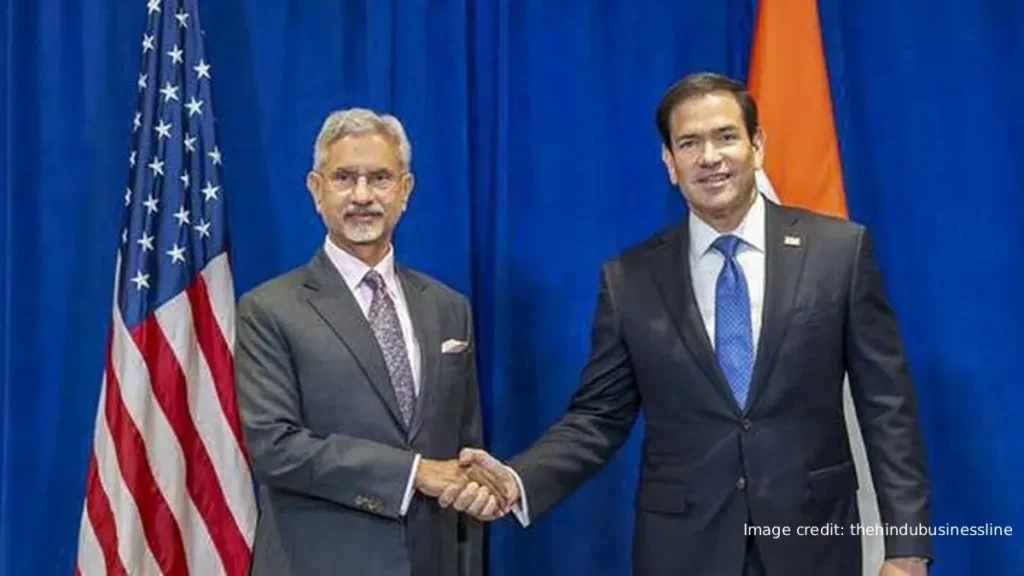
US Secretary of State Marco Rubio and Indian External Affairs Minister S. Jaishankar discussed US measures against countries that maintain economic ties with Russia and Iran during a meeting in New York on Wednesday.
The discussion comes after US President Donald Trump signed the Lindsey O. Graham Sanctioning Russia and Iran Act of 2026 into law last week. The legislation is aimed at increasing economic pressure on Russia over its invasion of Ukraine.
According to the US State Department, Rubio and Jaishankar discussed possible sanctions against countries that engage economically with Russia and Iran. Jaishankar later said on X that he had reiterated India’s interests and concerns regarding the sanctions legislation, also known as SRIA.
The new law requires Trump to impose tariffs of up to 100% within 30 days on goods imported into the United States from the five largest importers of Russian crude oil or gas. It also covers countries that knowingly make new purchases of Russian oil or gas after the law’s enactment, as well as countries identified among the top five helping Russia evade sanctions.
India is among the world’s largest buyers of Russian oil. After Russia’s invasion of Ukraine, India significantly increased its purchases of discounted Russian crude.
The issue has previously affected trade relations between India and the US. Trump imposed tariffs of up to 50% on Indian goods in August 2025, with India’s purchases of Russian oil being one of the reasons cited for the higher duties.
In February 2026, Trump rolled back those duties after saying India had committed to stopping purchases of Russian oil. However, India’s purchases from Russia only declined briefly before rising again, particularly following the supply disruption linked to the US-Israeli war on Iran.
India has maintained that its large population and growing economy require affordable energy supplies. Indian analysts have also argued that purchasing Russian oil helps support global supplies and keep domestic energy prices under control.