
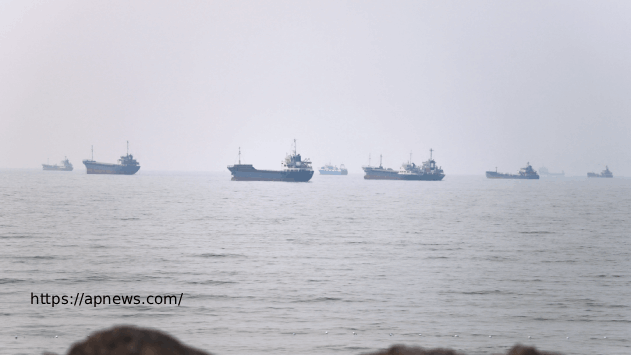
The fragile peace in the Middle East has shattered once again. The Strait of Hormuz, the world’s most critical oil chokepoint is ablaze after a rapid-fire escalation between the United States and Iran has pushed the region back to the brink of all-out war.
What began as a tense shadow conflict erupted into overt warfare on Tuesday when US Central Command (Centcom) unleashed a barrage of “powerful” strikes hitting over 80 targets across southern Iran, including Qeshm island, Bandar Abbas, and Sirik. The American bombardment was a direct retaliation for Monday’s attacks on three commercial oil tankers, which regional powers like Qatar and Saudi Arabia have squarely blamed on Tehran. Centcom confirmed its strikes pulverized 60 small boats, missile launch sites, and command centers to “impose heavy costs” for targeting innocent crews in international waters.
The political fallout was instantaneous. Before the bombs even dropped, Washington revoked a crucial US Treasury waiver that had temporarily lifted oil sanctions on Iran. This waiver was the crown jewel of a fragile, 14-point Memorandum of Understanding (MoU) signed just last month, which was meant to secure a permanent ceasefire “on all fronts.”
Now, that deal is in ashes.
By Wednesday morning, Iran struck back with fury. The Islamic Revolutionary Guard Corps (IRGC) announced it had launched an onslaught of 85 missiles and drones targeting US military facilities across the Gulf, explicitly striking a US Navy headquarters in Bahrain and an air base in Kuwait. Kuwait’s government, caught in the crossfire, fiercely lambasted the “repeated attacks” on its soil.
In Tehran, the rhetoric was defiant. Parliament Speaker Mohammad Bagher Ghalibaf accused Washington of shattering the MoU through “persistent threats” and “bullying,” declaring, “We don’t fold.” Iran’s foreign ministry countered the shipping accusations by claiming that the tankers had failed to coordinate their routes or had tampered with their tracking systems, thereby disrupting Iran’s efforts to ensure safe transit.
Meanwhile, Western allies are closing ranks behind Washington. Speaking from a NATO summit in Ankara, Turkey, alliance chief Mark Rutte firmly backed the American intervention. “I think it was absolutely necessary,” Rutte stated, arguing that Iran’s alleged tanker strikes were a blatant violation of the ceasefire.
The tragic irony of this latest flare-up is how close the two nations recently came to a diplomatic breakthrough. Under the newly signed MoU, Washington and Tehran had envisioned a future where Iran and Oman would jointly manage the Strait of Hormuz, even allowing Iran to collect “service fees” from passing ships. Instead, Iran’s aggressive push to assert sovereignty through its newly minted “Persian Gulf Strait Authority” has triggered a catastrophic relapse into violence.
Despite the smoke rising over the Gulf, some American officials still hold out hope, insisting anonymously that US negotiators will continue to work in “good faith” toward a final deal. But with shrapnel raining down on Iranian coastal towns and American bases under drone bombardment, the path back to the negotiating table has never looked more perilous.