
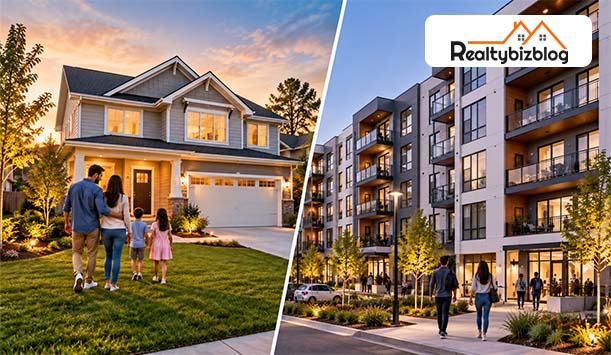
Buying a house sounds great until you start adding up the down payment, mortgage, property taxes, repairs, insurance, and everything else that comes with owning one. Renting sounds simpler, but many renters eventually get tired of cramped apartments, shared walls, and having nowhere to put the barbecue.
That gap between renting an apartment and owning a home is exactly where build-to-rent homes have found their sweet spot.
These communities give renters something that used to be difficult to find: an actual house, often with a yard, more privacy, community amenities, and professional property management all without taking on a mortgage.
Build-to-rent, commonly shortened to BTR, has grown rapidly in the U.S. in recent years. The idea isn’t entirely new, but changing housing costs, mortgage rates, lifestyle preferences, and the growing demand for single-family rentals have pushed the model into the spotlight.
For renters, BTR can provide flexibility and space. For investors and developers, it represents a growing segment of the housing market. But it isn’t a perfect solution for everyone.
So, what is build-to-rent housing, how does it work, and is renting a BTR home better than buying? Let’s take a closer look.
What Is a Build-to-Rent Home?
A build-to-rent home is a residential property constructed specifically to be rented rather than sold to an individual homeowner.
Unlike a typical rental house that may have originally been built as a home for sale, BTR communities are planned from the beginning around long-term rental demand. Developers may build dozens or even hundreds of homes within one professionally managed neighborhood.
The properties can look and feel much like traditional residential communities. You might find detached houses, townhome-style properties, duplexes, or smaller homes built on compact lots.
The major difference is ownership.
Instead of each house being purchased by an individual homeowner, the homes are generally owned by an investment group, development company, real estate firm, or another institutional owner. A professional management company then handles leasing, rent collection, maintenance, repairs, and community amenities.
You may also hear terms such as build-for-rent, B2R, or single-family build-to-rent. In most cases, these terms refer to essentially the same concept.
Common Types of Build-to-Rent Properties
BTR doesn’t have one standard floor plan or community design. Depending on the developer and location, a community might include:
| Property Type | What It Looks Like | Why Renters May Like It |
| Detached homes | Standalone single-family houses | More privacy and outdoor space |
| Small-lot homes | Houses built on smaller plots | House-style living with efficient land use |
| Duplexes | Two residences sharing one structure | More affordable house-style rental option |
| Row homes | Homes connected by shared walls | More space than many apartments |
| Horizontal apartments | Detached or semi-detached units in a community | Apartment-style management with a house-like layout |
The common thread is simple: the homes are designed to be rentals from the outset.
Why Are Build-to-Rent Communities Becoming So Popular?
The popularity of BTR isn’t difficult to understand when you look at the current housing market.
For many Americans, buying a home has become a much bigger financial commitment than it once was. High home prices, mortgage rates, insurance costs, and the cash needed upfront can make homeownership feel out of reach.
At the same time, renters still want many of the things associated with owning a house.
They want a second bedroom. They want a backyard. They want somewhere to park. They want room for a dog. They may want a quiet neighborhood instead of an apartment building.
Build-to-rent attempts to bring those preferences together.
The growth has been significant. In 2025, BTR properties accounted for roughly 7% of new single-family housing completions, compared with about 5% three years earlier and a historical level of roughly 2.7%.
Much of the construction has taken place in Sun Belt markets, where population growth, available land, and rising housing costs created favorable conditions for new rental communities.
There is another important shift happening, too.
Not everyone sees homeownership as the immediate end goal anymore. Younger renters, in particular, may value flexibility, mobility, and avoiding the financial responsibilities that come with owning a property.
For someone who expects to move for work within a few years, renting a house may make more sense than buying and then dealing with the costs of selling.
Also read: Creating Your First Home: Crafting Comfort & Style
Who Owns Build-to-Rent Homes?
A BTR neighborhood may look like a traditional subdivision, but the ownership structure behind it can be very different.
Building hundreds of rental houses requires substantial capital. A developer may acquire the land and oversee construction while an investment firm provides funding. In other cases, one company may handle several parts of the project.
Once the homes are completed, professional property managers typically take over the day-to-day operation.
Their responsibilities can include:
- Advertising available homes
- Screening prospective tenants
- Signing leases
- Collecting rent
- Responding to maintenance requests
- Coordinating repairs
- Maintaining shared amenities
- Managing community rules
For renters, this can be convenient. You aren’t calling a homeowner who happens to live across town when the air conditioner stops working. Instead, there’s usually a formal management system in place.
Investors can also participate in the growth of the sector without purchasing and managing an entire BTR community themselves. Real estate investment trusts, commonly known as REITs, can provide exposure to rental housing portfolios.
How Did Build-to-Rent Housing Get Started?
The idea of renting a single-family house has been around for decades. What changed was the scale.
The modern single-family rental industry expanded considerably following the 2008 financial crisis. Foreclosures created an opportunity for investors to purchase large numbers of relatively inexpensive homes and convert them into rentals.
Over time, investors became more interested in purpose-built rental housing.
Instead of buying an existing house and adapting it for tenants, developers could design properties specifically around renter preferences. That might mean practical floor plans, durable finishes, shared amenities, parking, pet-friendly spaces, and professionally managed services.
The economic pressures that helped fuel single-family rentals after the financial crisis haven’t disappeared. In many areas, buying a home remains considerably more expensive than renting one.
That has created room for BTR to grow.
Build-to-Rent vs. Rent-to-Own: What’s the Difference?
The names sound similar, but the concepts are very different.
A build-to-rent home is intended to remain a rental. You sign a lease, pay rent, and live in the property without acquiring ownership.
A rent-to-own arrangement, on the other hand, is structured around the possibility of purchasing the property later. Depending on the agreement, the renter may have an option or in some cases an obligation to buy after a specified period.
Here’s the simplest way to think about it:
| Feature | Build-to-Rent | Rent-to-Own |
| Main purpose | Long-term renting | Renting with potential ownership |
| Ownership during lease | Landlord/investor | Landlord/investor |
| Future purchase expected? | Usually no | Yes, depending on agreement |
| Equity from rent payments | No | Depends on contract |
| Best suited to | Renters wanting flexibility | Renters working toward ownership |
Neither option is automatically better. The right choice depends on your finances, plans, and how certain you are about eventually buying.
What Are the Advantages of Living in a Build-to-Rent Home?
The biggest appeal is that you can get many of the practical benefits of a house without becoming responsible for the house itself.
More Space
Compared with a typical apartment, a single-family rental can offer more living space, additional bedrooms, private entrances, garages, patios, and yards.
For families, that difference can be substantial.
Maintenance Is Someone Else’s Problem
A roof replacement can be a five-figure headache for a homeowner. A broken appliance isn’t much more enjoyable.
Renters generally aren’t responsible for major property repairs in the same way homeowners are. Maintenance requests typically go through the property manager.
Community Amenities
Many BTR developments are designed around shared amenities. Depending on the community, residents may have access to swimming pools, fitness centers, playgrounds, dog parks, walking paths, gathering spaces, or other recreational facilities.
That can create a neighborhood atmosphere that is difficult to replicate with a privately owned rental house.
More Flexibility
Renting doesn’t tie up your finances in a down payment or home equity. It can also make moving easier when your job, family circumstances, or priorities change.
For renters who aren’t ready to settle permanently in one location, that flexibility can be valuable.
A Chance to Experience Home Living
Some renters aren’t sure whether homeownership is right for them.
Living in a single-family rental can provide a useful test run. You get to experience the extra space, yard maintenance, neighborhood environment, and day-to-day realities of living in a house before committing to a purchase.
What Are the Downsides of Build-to-Rent Homes?
The convenience comes with trade-offs.
You Don’t Build Equity
This is probably the biggest difference between renting and buying.
Your rent pays for the right to live in the property. It generally doesn’t give you an ownership stake. A homeowner, meanwhile, can build equity as mortgage principal is paid down and the property potentially appreciates.
Rent Can Increase
A mortgage can offer a degree of payment predictability, particularly with a fixed-rate loan.
Rent doesn’t work the same way. When your lease expires, the landlord may increase the rent based on market conditions and the terms of the agreement.
That matters if you’re planning to stay for many years.
Less Freedom to Customize
Want to knock down a wall? Paint the kitchen cabinets? Replace the flooring?
As a renter, you usually can’t make major changes without permission. Even smaller alterations may be restricted by the lease.
Corporate Management Can Feel Less Personal
Professional management can be efficient, but it can also feel impersonal.
Negotiating rent, requesting exceptions, or discussing individual circumstances may be more difficult with a large property management company than with an individual landlord.
The Homes May Lack Character
Purpose-built communities often prioritize efficiency, durability, and consistency. That’s useful, but it can mean the houses feel somewhat standardized.
If you love older homes with unusual architecture and plenty of personality, a new BTR development may not give you the same experience.
Is Renting a Build-to-Rent Home Cheaper Than Buying?
This is where the answer gets more complicated.
In many markets, renting a single-family home costs less each month than buying that same property with a mortgage, particularly when you factor in the upfront down payment and ownership costs.
As of August 2026, the typical monthly mortgage payment for homebuyers was around $2,600, while the median rent was about $2,000, according to the source material.
But comparing rent with a mortgage payment alone doesn’t tell the whole story.
Homeowners also have to consider property taxes, homeowners insurance, maintenance, repairs, and other ownership expenses.
Renters have fewer of those responsibilities, but they don’t receive the long-term benefit of building home equity.
That’s why the better question isn’t simply, “Is renting cheaper than buying?”
Ask instead: “Which option makes more financial sense for my situation over the next five to ten years?”
Your answer may change depending on how long you expect to stay, how much cash you have saved, your local housing market, and whether you’re financially prepared for unexpected ownership costs.
Is Build-to-Rent a Good Real Estate Investment?
BTR has also attracted considerable attention from investors.
The basic attraction is straightforward: people need places to live, and demand for rental housing remains strong in many markets.
A well-located BTR community can potentially benefit from rental income, relatively stable demand, lower tenant turnover, and property appreciation. Developers can also build properties specifically for the needs of today’s renters.
But this isn’t a low-risk shortcut to real estate wealth.
Large-scale BTR developments require considerable capital. Investors have to account for land acquisition, construction costs, financing, taxes, insurance, property management, vacancies, maintenance, and local rental demand.
Smaller investors may find it difficult to compete with institutional developers.
For someone interested in the BTR sector but not ready to develop an entire community, REITs can provide another avenue for gaining exposure to rental real estate.
Other strategies may include buying an existing rental property, adding an accessory dwelling unit, or using a strategy such as BRRRR: buy, rehab, rent, refinance, and repeat.
Why Is Build-to-Rent Controversial?
The rapid expansion of BTR has also raised an important question:
Should valuable residential land be used to build homes for renters when so many people are struggling to buy?
Critics argue that institutional investors have become too involved in housing and that more land should be directed toward homes available for individual buyers.
The counterargument is that BTR developments are not simply removing existing homes from the market. Unlike investors purchasing an existing house, developers of purpose-built rental communities are adding new housing units.
Estimates in the source material suggest BTR developers may add between 70,000 and 130,000 homes annually.
That creates a complicated policy debate. Restricting institutional investment may address concerns about ownership concentration, but discouraging new construction could also reduce the supply of rental housing.
Ultimately, the larger housing problem remains one of supply and affordability. Renters need homes. Buyers need homes. Communities need more housing choices.
So, Is Build-to-Rent Right for You?
There isn’t one answer that works for every renter.
A BTR home may make sense if you want the space and privacy of a house but aren’t ready or don’t want to take on homeownership.
It can be particularly attractive if you:
- Need more space than an apartment provides
- Want a private yard or garage
- Don’t want to handle major repairs
- Prefer renting to buying
- Expect to move within a few years
- Want access to community amenities
- Aren’t prepared for a large down payment
Buying may be the better long-term choice if building equity is important to you, you’re financially prepared for ownership costs, and you expect to remain in the same area for many years.
And there’s another option worth considering: renting a less expensive property while putting the difference toward your future down payment.
The smartest decision isn’t necessarily the one that gets you the biggest house. It’s the one that fits your budget and your plans.
Frequently Asked Questions About Build-to-Rent Homes
1. What does build-to-rent mean?
Build-to-rent refers to homes constructed specifically for long-term rental rather than individual sale. These properties are often part of professionally managed communities containing detached houses, duplexes, townhomes, or other single-family-style residences.
2. Do you own a build-to-rent home?
No. In a standard BTR arrangement, you rent the property from an owner or investment company. Your monthly payments do not normally create equity or ownership in the house.
3. Are build-to-rent homes cheaper than buying?
They can be less expensive upfront because renters don’t need a down payment or mortgage. Monthly rent may also be lower than the full cost of owning a comparable property. However, renters don’t build equity, and rent can increase when the lease is renewed.
4. Are build-to-rent homes a good investment?
They can be, particularly in markets with strong rental demand, but they aren’t guaranteed investments. Development costs, financing, vacancies, maintenance, rental prices, taxes, and local market conditions all affect potential returns.
Final Thoughts: The Future of Renting May Look More Like Homeownership
The traditional idea of renting often brings apartments and shared walls to mind. Build-to-rent is changing that picture.
For many people, a professionally managed single-family rental offers a practical middle ground. You get more room, greater privacy, outdoor space, and the feeling of living in a neighborhood without taking on the full financial responsibility of owning the property.
But convenience isn’t the same thing as value.
Before choosing a BTR home, look beyond the monthly rent. Compare the total cost, lease terms, future rent increases, amenities, location, and what you’re giving up by not building equity.
For investors, the same principle applies. Strong rental demand can create opportunity, but successful BTR projects depend on careful numbers, sensible development, and the realities of the local market.
Housing is changing, and renters have more choices than they once did. Build-to-rent is one of the clearest examples of that shift.
For more practical insights into real estate trends, housing decisions, investing, and the changing property market, keep exploring RealtyBizBlog. The goal isn’t simply to follow what’s happening in real estate, it’s to understand what those changes could mean for buyers, sellers, renters, and investors as many real estate agent bloggers share their thoughts.