
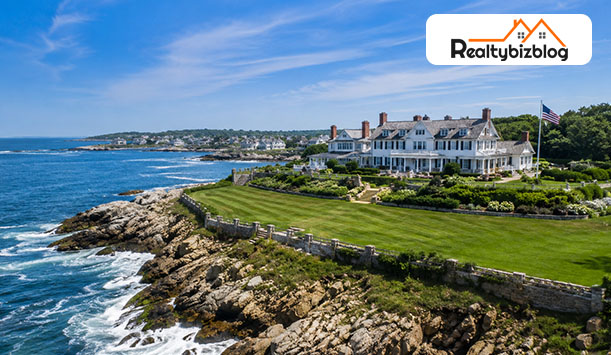
We have all seen the sun-drenched, star-studded photos: epic Fourth of July bashes, A-list celebrities lounging on sweeping lawns, and the unmistakable backdrop of the sparkling Atlantic Ocean. This is Holiday House, the iconic 11,000-square-foot high-perch mansion owned by Taylor Swift. Perched majestically atop the absolute highest point of Watch Hill, Rhode Island, this breathtaking Colonial-style fortress spans over five magnificent acres of pristine oceanfront real estate. It is the visual definition of the American dream, set to a platinum-selling soundtrack.
But stripped of the paparazzi lenses and the famous guest lists, what does it actually look like to reside day-to-day in this legendary seaside community?
For the vast majority of aspiring homeowners, hosting a holiday weekend blowout next door to a global pop icon remains an elusive fantasy. Yet, for affluent buyers, elite real estate investors, and dedicated real estate agent bloggers tracking ultra-luxury trends, this historic coastal village represents the pinnacle of New England exclusivity. Living here means immersing yourself in a world of unmatched privacy, timeless architecture, and a staggering financial reality.
Let’s pull back the curtain on the true cost of moving into Taylor Swift’s neighborhood. We will break down everything from eye-watering down payments and monthly carrying costs to the hidden, relentless expenses of maintaining a luxury estate against the raw elements of the Atlantic coast.
The Watch Hill Financial Blueprint: At a Glance
Before we dive into the granular details of mortgages, custom coastal engineering, and local tax structures, let’s lay out the baseline financial requirements. If you have ever wondered what kind of capital is required to safely land a piece of this shoreline, the numbers below outline the entry-level realities of this ultra-luxury market.
| Financial Metric | Estimated Cost / Requirement | Monthly Impact Equivalent |
| Median Home Purchase Price | $7,100,000 | Upfront asset requirement |
| Standard 20% Down Payment | $1,420,000 | Due at closing |
| Principal & Interest Mortgage | $35,900 / month | Based on 6.5% interest on a 30-year fixed jumbo loan |
| Annual Property Taxes | $60,000 – $90,000 / year | $5,000 – $7,500 / month |
| Coastal Homeowners Insurance | $15,000 – $40,000+ / year | $1,250 – $3,333+ / month |
| Luxury Structural Maintenance | $25,000 – $75,000+ / year | Varies wildly based on storm seasons |
| Prime Summer Rental Rates | $15,000 – $25,000+ / month | Seasonal peak pricing |
| Recommended Annual Income | $1,900,000 – $3,400,000+ | To comfortably afford without over-leverage |
Inside the Ultra-Luxury Mechanics of Watch Hill Real Estate
Stepping into the Watch Hill housing market is not like buying a home anywhere else in Rhode Island. This is a highly insulated, historic enclave where traditional market forces rarely apply. It is a playground for generational wealth, meaning that normal fluctuations in interest rates or standard national housing corrections barely register here.
“Watch Hill’s ultra-luxury market remains remarkably insulated from regional housing slowdowns, as wealthy buyers drive intense competition for a nearly nonexistent supply of multi-million dollar waterfront estates,” explains Rob Scaralia, Director of Education at the Real Estate Institute of Rhode Island. “However, buying into this historic enclave requires looking past the steep sticker price to absorb the massive, ongoing costs of premium coastal insurance and relentless maintenance against the Atlantic marine environment.”
For real estate agents blog content creators and local market analysts alike, analyzing this neighborhood requires looking past the glamorous surface to understand the cold, hard cash flow required to keep these properties running.
The Jumbo Mortgage Reality
When a neighborhood boasts a median home price hovering around $7.1 million, you leave the world of conventional lending completely behind. Buyers who do not opt for an all-cash purchase must navigate the strict world of jumbo financing.
Let’s look at a realistic scenario: You purchase a beautiful, shingle-style property at the median price point of $7,100,000. Even if you come to the table with a massive 20% down payment, which equates to $1,420,000 in liquid cash, you are still left financing a staggering loan balance of $5,680,000.
Assuming a highly competitive 30-year fixed jumbo mortgage rate of 6.5%, your base monthly principal and interest payment checks in at approximately $35,900 per month. This figure does not account for escrow, meaning your real monthly check will be significantly higher once local protections are factored in.
The Upfront Capital Hurdle: Down Payments
Because lenders take on substantial risk when underwriting multi-million dollar coastal properties, down payment expectations are unforgiving. While first-time buyers in suburban markets might leverage low-down-payment programs, the luxury tier demands heavy financial positioning.
Here is how the upfront cash requirements break down based on various percentage thresholds for a median-priced $7.1M home:
- 3% Down Payment: $213,000 (Rarely accepted for jumbo luxury products)
- 10% Down Payment: $710,000 (Requires stellar asset verification and high reserves)
- 20% Down Payment: $1,420,000 (The standard baseline to avoid private mortgage insurance and secure optimal rates)
- 30% Down Payment: $2,130,000 (Often utilized to bring loan balances down to more favorable financing terms)
The Local Tax Burden
Property taxes in New England are notoriously complex, but Watch Hill benefits slightly from Rhode Island’s structured approach to coastal luxury assessments. However, when a home is valued in the multi-millions, even a modest tax rate yields a substantial annual bill.
For a standard luxury estate in this zip code, homeowners should anticipate an annual property tax obligation ranging from $60,000 to $90,000 per year. Broken down monthly, that adds an extra $5,000 to $7,500 to your carrying costs. For true oceanfront mega-mansions that span multiple acres like Taylor Swift’s sprawling compound, the annual tax liability easily clears six figures.
The Cost of Coastal Protection: Insurance
Insuring a home within striking distance of the Atlantic Ocean is one of the most significant financial surprises for unprepared buyers. Coastal properties face a barrage of environmental risks: severe winter northeasters, tropical storm systems, high-velocity winds, and corrosive salt air.
A standard homeowners policy will not cut it here. To properly protect a $7,100,000 asset, an owner must assemble a comprehensive insurance portfolio that includes specialized windstorm coverage, high-limit hazard insurance, and separate, dedicated flood policies through the National Flood Insurance Program (NFIP) or private excess flood insurers. Annual premiums routinely scale between $15,000 and $40,000+, depending entirely on the structural elevation, proximity to the baseline high-tide mark, and the age of the building materials.
Hidden Factors and Micro-Market Dynamics
What makes Watch Hill truly unique are the hyper-local variables that define the property ownership experience. This isn’t just about paying your mortgage; it’s about navigating a distinct lifestyle and preservation culture. For professionals engaging in guest blogging for real estate agents, highlighting these nuanced, hidden costs is exactly what provides genuine value to high-net-worth readers.
Structural Degradation from the Marine Environment
The very thing that makes Watch Hill so beautiful, the crashing Atlantic surf which is an absolute nightmare for building longevity. Salt air acts as a constant abrasive, corroding metal hardware, deteriorating standard exterior paints, and rotting unmanaged woodwork.
Vehicles, outdoor light fixtures, flashing, and window seals must be checked constantly. High-end homeowners in this area must employ year-round property management services to handle routine staining, power washing, and structural sealing, adding tens of thousands of dollars to the annual operating budget.
The Complexity of Historic Preservation
Watch Hill is fiercely proud of its architectural heritage. The village is lined with stunning Victorian cottages, sweeping turn-of-the-century estates, and classic Colonial Revival designs.
If you purchase a home designated as a historic structure, you cannot simply hire a standard contractor to remodel the facade. Any restorations, structural repairs, or additions must conform to strict local historic preservation guidelines. This requires specialized architectural drafting, historic commission approval processes, and master craftsmen who understand traditional New England building methodologies, all of which drive labor costs through the roof.
[Historic Coastal Architecture]
│
├──> High-velocity Wind & Storm Surge Risks (Requires Engineered Materials)
├──> Local Historic Commission Oversight (Restricts Modern Aesthetic Changes)
└──> Master Craftsman Labor Premiums (Elevates Renovation Costs by 30-50%)
Extreme Seasonal Inventory Drops
The geographic footprint of Watch Hill is tiny. It is a secluded peninsula, meaning the physical supply of land is finite. There is zero room for sprawling new subdivisions. Because these legacy properties are often passed down through generations, the number of active listings in any given season can usually be counted on one or two hands. This absolute scarcity creates an permanent seller’s market, ensuring that values remain remarkably resilient even during national economic downturns.
Architectural Profiles: Custom Builds and Premium Renovations
Because move-in-ready, pristine oceanfront properties are rarely available, many affluent buyers choose to purchase older, dated Watch Hill estates with the intention of executing a complete structural overhaul.
Bringing a custom architectural vision to life along the Rhode Island shoreline requires navigating a complex web of environmental regulations, coastal zoning boards, and heavy-duty structural engineering requirements.
The Cost to Design and Build Classic New England Estates
To maintain the visual integrity of the community, most new builds and major structural overhauls emulate classic Colonial, Colonial Revival, or Shingle-style architecture. These designs prioritize formal symmetry, multi-pane windows, sweeping covered porches, and natural cedar shingles that weather into a beautiful, classic gray over time.
However, building to these aesthetic standards while meeting modern, rigorous coastal building codes is an incredibly expensive endeavor. Foundations must often be anchored deep into the coastal bedrock or elevated to withstand potential storm surges. Windows must feature high-impact, hurricane-grade glass capable of repelling flying debris in hurricane-force winds.
“In Watch Hill, move-in-ready homes come at a premium, so many buyers find it’s more cost-effective to buy a property that needs a major update,” notes Bridget Bacon, Director of Operations at Red House Design Build. “For a large renovation, you should budget anywhere from $300,000 to over $1,000,000, whereas new construction in this area usually starts around $2,000,000. Beyond the purchase price, you have to account for the complexity of coastal building codes, which require a much higher level of planning and transparency than a typical inland project.”
Navigating the Elements with High-Performance Materials
To ensure a home stands the test of time next to properties like Holiday House, standard construction materials are discarded in favor of commercial-grade, marine-resilient alternatives.
“We’ve seen a growing demand in Watch Hill for luxury renovations and custom homes that blend timeless coastal architecture with modern performance and livability,” says Molly Stach, Chief Growth Officer at Sweenor Builders. “Many properties in the area require significant investment beyond the purchase itself, particularly when it comes to updating older homes, navigating coastal building regulations, and incorporating resilient materials designed to withstand the harsh New England shoreline climate. Buyers are often surprised by the level of craftsmanship, detailing, and specialized construction expertise required to execute high-end waterfront projects properly, where quality, longevity, and design integrity are paramount.”
Architectural fees alone for these high-end undertakings typically command between 8% and 15% of the total construction cost, reflecting the intense engineering required to balance historic aesthetics with modern environmental resilience.
The Seasonal Rental Alternative: Testing the Coastal Waters
Given the massive capital requirements tied to a permanent purchase, many luxury consumers choose to sample the Watch Hill lifestyle via the high-end seasonal rental market. This allows individuals to experience the exclusive village atmosphere during its vibrant summer peak without committing to multi-million dollar jumbo financing or long-term property management.
The Premium on Summer Renting
The rental market in Watch Hill is sharply divided by the calendar. During the shoulder seasons (late autumn and early spring), a beautiful historic cottage or an in-town condo might command anywhere from $8,000 to $15,000 per month.
However, once June arrives and the New England summer swings into full gear, prices skyrocket. Prime summer rentals situated near East Beach or offering unobstructed views of the Atlantic regularly command between $15,000 and $25,000+ per month. In the ultra-luxury tier, fully staffed oceanfront estates can easily command those figures for a single week of occupancy.
When contrasted against a full monthly mortgage ownership cost, which routinely clears $45,000 to $80,000 per month once taxes, insurance, and elite maintenance are factored in – renting a summer retreat can actually emerge as the more practical option for transient high-net-worth individuals.
The Ultimate Bottom Line: Is Living in Pop Royalty’s Backyard Worth It?
There is no sugarcoating the reality: relocating to Taylor Swift’s seaside neighborhood requires an extraordinary financial commitment. It is an investment ecosystem defined by multi-million dollar entry fees, intense competition for historic inventory, and a continuous stream of premium carrying costs designed to protect your asset from the beautiful but unforgiving Atlantic environment.
Yet, for those who possess the means, Watch Hill offers something that standard luxury suburbs simply cannot replicate: an irreplaceable blend of historical charm, absolute privacy, generational prestige, and an unhurried, classic New England coastal lifestyle. It is a market where scarcity drives long-term value retention, making it a highly stable anchor for an elite real estate portfolio.
Looking to Deepen Your Real Estate Expertise?
Navigating ultra-luxury coastal real estate markets requires deep insight, data-driven analysis, and a clear understanding of shifting economic landscapes. Whether you are an investor looking for your next legacy property, an active industry professional, or part of the growing community of real estate agent bloggers looking to deliver premier content to your audience, staying ahead of market trends is essential.
For more deep-dive market breakdowns, luxury neighborhood cost analyses, and actionable industry insights, make sure to bookmark Realtybizblog. We break down the complex mechanics of modern real estate, providing professionals and consumers alike with the trusted intelligence they need to make smart, calculated moves in an ever-evolving market.
Frequently Asked Questions (FAQs)
What is the average home price in Taylor Swift’s Watch Hill neighborhood?
The median home price for luxury properties in the exclusive enclave of Watch Hill, Rhode Island, is approximately $7,100,000. Oceanfront estates and larger historic properties with direct beach access routinely command significantly higher multimillion-dollar valuations.
Why are homeowners insurance rates so high for properties in Watch Hill?
Watch Hill properties sit directly on a coastal peninsula exposed to the Atlantic Ocean. Because of this, they face significant environmental risks from severe storms, high winds, flooding, and salt air corrosion. This requires specialized windstorm, hazard, and excess flood policies, driving annual premiums between $15,000 and $40,000+.
Can you easily buy vacant land to build a custom home in Watch Hill?
Virtually no vacant land exists in Watch Hill due to its small, defined geographic footprint and strict local zoning laws. Most buyers looking for a custom home must purchase an existing older property, navigate complex coastal preservation guidelines, and execute a full-scale structural renovation or rebuild.
What kind of annual income is required to comfortably live in this neighborhood?
To comfortably afford the mortgage, property taxes, high-end coastal insurance, and intensive property maintenance associated with a median-priced $7.1M Watch Hill estate, a buyer should ideally possess an annual income ranging from $1.9 Million to $3.4 Million+.